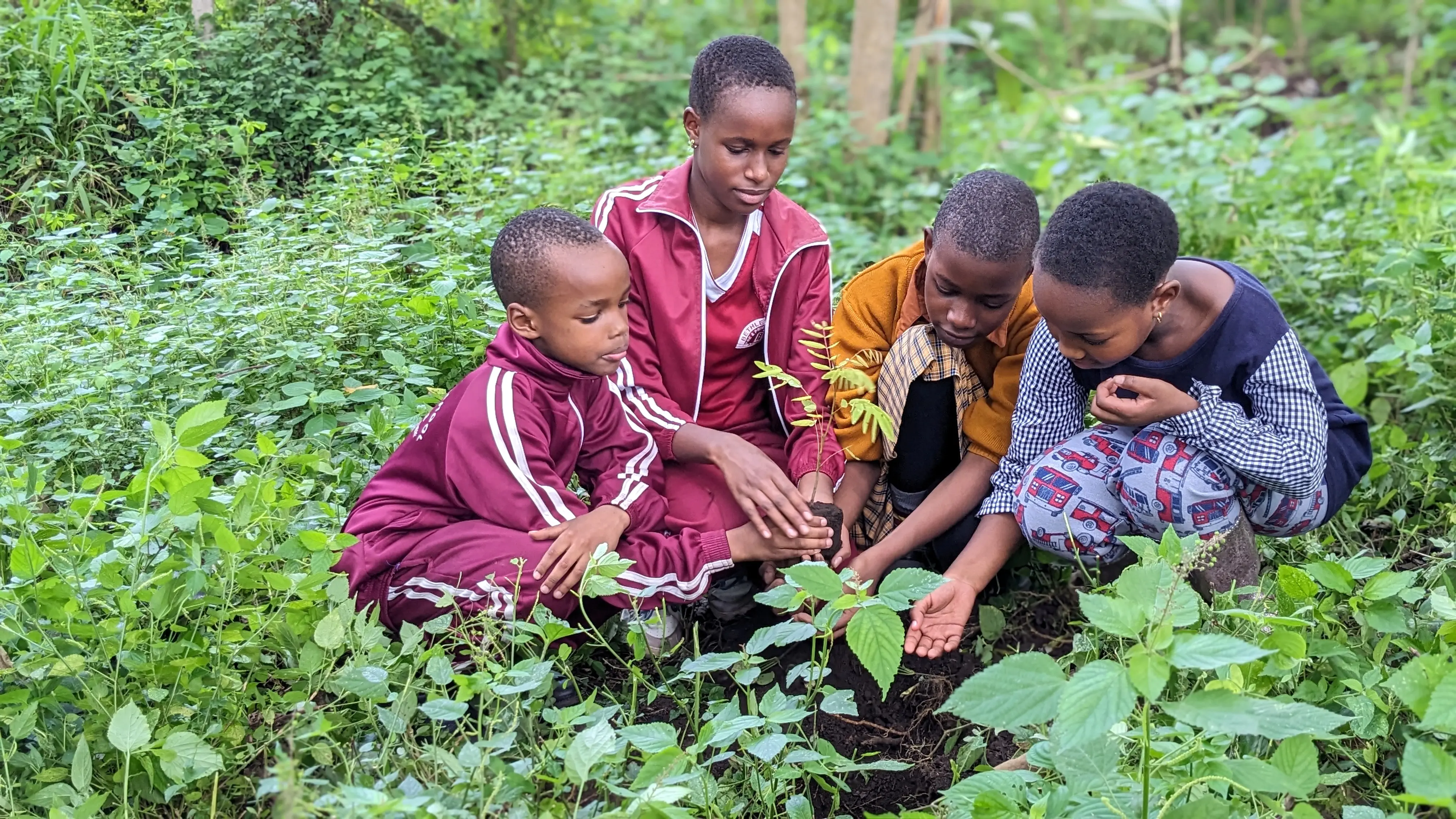
A tree planted in a school yard does several things at once. It shades a classroom that gets too hot to concentrate in. It holds soil that would otherwise wash away. Some of them produce fruit the children eat. And the pupils who plant them learn conservation by doing it rather than reading about it.
Project at a glance
- What it is: tree planting on school grounds and in surrounding communities
- Where: primary and secondary schools across Tanzania
- Target: 90,000 trees over three years
- Species: indigenous shade trees, medicinal trees, ornamental trees, and grafted fruit trees including mango, avocado and orange
- Led by: Tupendane Foundation and Initiatives (TUFOI)
What the trees are for
Climate and soil
Trees absorb carbon dioxide, moderate temperature, and hold soil in place. Tanzania loses roughly 400,000 hectares of forest a year, and school grounds are one of the few places where replanting can be organised, supervised and sustained.
Food and nutrition
Grafted fruit trees — mango, avocado, orange — produce food within a few years and continue for decades. For a school, that is nutrition at no recurring cost. For a community, surplus fruit is income.
Medicine and biodiversity
Indigenous medicinal species are disappearing from the landscape around many Tanzanian communities. Propagating and replanting them preserves both the plants and the knowledge of how they are used.
Learning
Pupils who plant and tend trees learn conservation practically: why soil erodes, what a tree does for temperature, how long things take to grow. It is a lesson that does not need a laboratory.
What we have learned about survival
In 2025 we went back and counted the trees planted the previous year. At Usa River Primary School, roughly 10% had survived — lost mainly to livestock damage and insufficient supervision. Medicinal plantings at Usa River and Mukuru Village reached 70%.
The difference was not species or soil. It was stewardship. Where someone had a direct stake in the plants and a reason to protect them, the trees lived.
That finding has changed how we plan this work: protection from livestock designed in from the start, clear responsibility for supervision agreed before planting, and fewer trees in places where nobody will look after them. We publish the 10% because a survival rate you can see is worth more than a planting total you cannot check.
What it costs
| Tree type | Cost per tree |
|---|
| Grafted fruit tree (mango, avocado, orange) | TZS 4,000 |
| Multipurpose tree (shade, medicinal, ornamental) | TZS 2,000 |
What your support plants
| Contribution | Plants |
|---|
| USD 8 | 10 multipurpose trees |
| USD 16 | 10 fruit trees |
| USD 50 | A small school garden, 30+ fruit trees |
| USD 160 | 100 fruit trees |
| USD 800 | 1,000 multipurpose trees |
| USD 1,600 | 1,000 fruit trees |
Support this project
Every contribution plants trees that provide shade, food, medicine and soil protection for decades. TUFOI's accounts are independently audited each year.